Creator Monetization System Setup: Your 2026 Guide

A creator monetization system setup is the structured process of turning your content and audience into sustainable revenue through subscriptions, paid messaging, tipping, and affiliate commissions. Platforms like OnlyFans, Passes.com, Substack, and MegaNova Studio each offer distinct paths to paid income, but the architecture you build around them determines whether you earn consistently or scramble month to month. The difference between creators who generate predictable revenue and those who don’t is rarely talent. It’s structure. This guide walks you through every layer of that structure, from platform selection to audience conversion, so you can build a monetization system that actually holds.
How to choose the right platform for your creator monetization system
Platform choice is the single most consequential decision in your setup for creator income, because fees, features, and audience expectations vary dramatically across options.
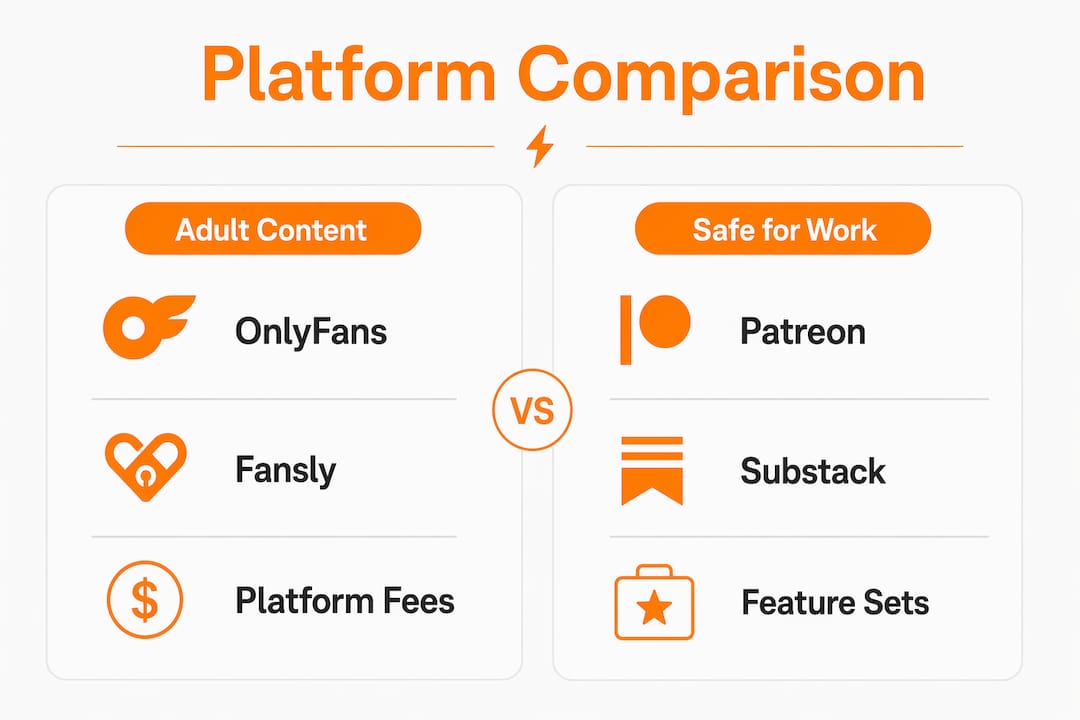
The first split to understand is adult content versus safe-for-work (SFW). OnlyFans and Fansly dominate the adult content space, with OnlyFans taking 20% of creator revenue and Fansly operating on a tiered commission structure. For SFW creators, Passes.com, Patreon, and Substack offer subscription infrastructure without adult content restrictions. Substack charges 10% platform fees plus Stripe processing fees totaling approximately 13 to 16% of gross revenue. That means a $10/month subscriber nets you roughly $8.50 before taxes. Fee awareness at the platform selection stage prevents painful surprises after launch.

Here is a direct comparison of the major platforms:
| Platform | Content type | Platform fee | Key features |
|---|---|---|---|
| OnlyFans | Adult/SFW | 20% | Subscriptions, PPV, tips, messaging |
| Fansly | Adult/SFW | 20% | Subscriptions, live streams, bundles |
| Passes.com | SFW | Varies | Subscriptions, paid DMs, analytics |
| Patreon | SFW | 5–12% | Tiers, community, integrations |
| Substack | SFW (writing/audio) | 10% + processing | Newsletter, podcast, paid posts |
| MegaNova Studio | AI/SFW | Commission-based | AI characters, referral rewards, analytics |
Beyond fees, evaluate the feature set against your content format. Livestream tipping matters if you perform live. Paid messaging is critical if your audience expects direct access. Revenue tracking dashboards are non-negotiable for any serious setup. MegaNova Studio’s Creator Center, for example, provides detailed commission tabs for transparent earning management across referrals, sales, and character interactions.
Onboarding speed also varies. Most platforms complete setup in 10 to 30 minutes, but identity verification can add 24 to 72 hours. Build that delay into your launch timeline.
How to design subscription tiers that convert and retain
Subscription tier design is where most creators leave money on the table. A single flat-rate subscription forces every fan into the same box. Multiple tiers let fans self-select their spending level, which consistently produces higher average revenue per subscriber.
The research-backed pricing structure for most creator categories looks like this:
- Entry tier ($5–$15/month): Basic feed access, community membership, or a monthly newsletter. Low friction for new subscribers who want to test your value.
- Mid tier ($20–$50/month): Exclusive content, early access, or monthly Q&A sessions. This tier carries the highest volume of serious fans.
- Premium tier ($75–$250/month): Direct messaging access, personalized content, or one-on-one calls. Three tiers convert better than one because fans choose their own commitment level rather than facing a binary yes or no.
Content preparation before launch is equally critical. Creators who launch with 30 to 60 days of pre-produced content reach profitability significantly faster than those who launch with a handful of posts. Aim for 5 to 10 starter pieces across your main feed, at least one premium-only item per tier, and a personalized welcome message for new subscribers. That welcome message alone reduces early churn because it signals that a real person is paying attention.
Pro Tip: Write your tier benefit descriptions in specific, concrete terms. “Exclusive weekly video breakdowns of my process” outperforms “exclusive content” every time because it tells the subscriber exactly what they are buying.
One pricing detail that catches creators off guard: fixed per-transaction fees like Stripe’s $0.30 charge hit low-priced tiers disproportionately hard. On a $5 subscription, that $0.30 represents 6% of the transaction before the platform fee is even applied. Price your entry tier at $7 or higher to protect your effective margin.
Setting up payment, tax info, and payout configuration
Payment configuration is the least glamorous part of building a creator income system. It is also the part that causes the most delays when skipped or rushed.
The core steps are:
- Link your bank account or payment processor. Most platforms support direct bank deposit or Stripe. Stripe’s standard rate is 2.9% plus $0.30 per domestic card transaction, with an additional 0.7% for subscription billing. International transactions carry higher rates.
- Set your payout threshold and frequency. MegaNova Studio requires a $25 minimum balance before processing payouts on the first of each month. Other platforms offer weekly payouts at $20 minimums. Match your threshold to your expected monthly volume so you are not waiting months for your first transfer.
- Submit tax information before you earn. US creators who earn $600 or more annually receive a 1099-NEC from their platform. Submitting your W-9 or tax details at account setup prevents payout holds that can freeze your earnings mid-month.
- Verify your identity early. Most platforms require government ID verification before activating payouts. Submitting this on day one eliminates a common bottleneck that delays first earnings by days or weeks.
Pro Tip: Open a dedicated business checking account for creator income before you set up payouts. Mixing creator revenue with personal spending creates a tax headache and makes it harder to track your actual profit margins.
Creators frequently underestimate compliance requirements for platform approvals, which directly affects how quickly your monetization system goes live. Treat the admin layer as part of your launch checklist, not an afterthought.
What are the best strategies to convert followers into paying subscribers?
Converting your existing social audience into paying subscribers is the highest-leverage activity in your entire monetization setup. The math is straightforward: creators with followings between 10,000 and 50,000 can realistically convert 1% to 5% of followers into paid subscribers within 60 days through consistent promotion. On a 20,000-follower account, that is 200 to 1,000 paying subscribers.
The tactics that drive those conversions are specific:
- Place your subscription page link in every bio across Instagram, TikTok, X, and YouTube. A link buried in a pinned post gets a fraction of the clicks that a bio link receives.
- Integrate CTAs into regular content, not just dedicated promotional posts. Mentioning your subscription page in the middle of a high-performing video or post captures attention when engagement is already high.
- Build a clear value proposition. “Subscribe for weekly behind-the-scenes videos and direct access to my DMs” converts better than “support my work.” Specificity removes the subscriber’s uncertainty about what they are paying for.
- Deliver consistent free content before asking for payment. Launching paid subscriptions before building an engaged free audience produces poor conversion. Trust is the prerequisite for payment.
TikTok’s monetization program, for context, requires at least 10,000 followers and 100,000 video views in the last 30 days before eligibility. That threshold illustrates a broader principle: platforms reward creators who have already demonstrated audience engagement, not just follower counts.
“The most effective creator monetization setups provide a trust-to-pay conversion path instead of just a paywall, emphasizing consistent value delivery and alignment with audience behavior.” — Beehiiv Blog
For creators using AI-driven tools, platforms like FanPro Studio offer built-in referral links, automated payouts, and sales analytics that reduce the manual work of tracking conversion across channels.
Key takeaways
A creator monetization system succeeds when platform fees, tier pricing, payment configuration, and audience conversion tactics are treated as one integrated architecture rather than separate tasks.
| Point | Details |
|---|---|
| Platform fees compound fast | Substack’s combined fees reach 13–16%; factor this into pricing before launch. |
| Three tiers outperform one | Tiered pricing lets fans self-select spend levels, raising average revenue per subscriber. |
| Tax setup prevents payout delays | Submit W-9 or tax info at account creation to avoid frozen earnings at the $600 threshold. |
| Free content precedes paid conversion | Creators who build engaged free audiences first convert subscribers at significantly higher rates. |
| Bio links drive the fastest growth | Subscription page links in social bios consistently outperform pinned posts or one-off promotions. |
Why most creator monetization setups fail in the first 90 days
Most creators I’ve seen struggle with monetization are not failing because of bad content. They are failing because they treated their monetization setup as a single event rather than a system with interdependent parts.
The pattern is predictable. A creator picks a platform, sets one subscription price, posts a few times, and then wonders why subscribers aren’t converting. What they missed is the architecture: the pricing logic that accounts for per-transaction fees, the content depth that makes a new subscriber feel immediately rewarded, and the consistent social promotion that keeps the subscription page visible week after week.
A diversified revenue portfolio is the other piece most creators skip. Subscriptions are a foundation, not a ceiling. Sponsorships, digital products, licensing, and service offerings each add a layer of income that protects you when one stream dips. No single revenue source should represent more than 50% of your total income if you want real stability.
Pricing tiers deserve more strategic thought than most creators give them. I’ve watched creators set a $3 entry tier because they thought it would attract more subscribers, only to discover that the effective margin after Stripe fees and platform cuts made it nearly worthless. Price for margin, not just volume.
The technology platforms available in 2026 genuinely reduce the operational burden of running a creator business. But no platform replaces the creator’s responsibility to show up consistently, communicate value clearly, and build the kind of trust that makes a follower willing to pay. The system handles the mechanics. You handle the relationship.
— Sale
How Revenueoperator helps you build your monetization system
Revenueoperator’s Monetization Architecture Method is built specifically for creators who are done guessing and ready to build a system that converts. The method addresses the root cause of inconsistent creator income: a poorly structured path from free audience to paying subscriber. Through integrated payment setup, subscriber analytics, and a proven conversion framework, Revenueoperator gives you the architecture that most creators spend months trying to reverse-engineer on their own. If you are ready to move from unpredictable earnings to a reliable monthly income, explore how Revenueoperator can accelerate your setup and remove the trial-and-error from your monetization process.
FAQ
What is a creator monetization system setup?
A creator monetization system setup is the end-to-end process of configuring platforms, subscription tiers, payment processing, and audience conversion tactics to generate consistent income from your content. It treats revenue generation as a structured system rather than a series of one-off decisions.
Which platform has the lowest fees for creators?
Patreon’s fee structure starts at 5% for its basic plan, making it one of the lower-cost options for SFW creators. Substack’s combined platform and processing fees reach 13 to 16%, which is higher but includes built-in email infrastructure.
How many subscribers do I need to make real money?
With a mid-tier price of $25/month and a 2% conversion rate from a 10,000-follower audience, 200 subscribers generate $5,000 in gross monthly revenue before fees. Subscriber count matters less than tier pricing and conversion rate.
When should I submit tax information on creator platforms?
Submit your W-9 or equivalent tax information at account creation, before you earn a single dollar. US platforms issue a 1099-NEC at $600 in annual earnings, and missing tax documentation can freeze your payouts at the worst possible time.
How long does it take to set up a subscription page?
Most platforms complete the technical setup in 10 to 30 minutes, but identity verification adds 24 to 72 hours. Creators who prepare starter content and payment details in advance can go live within two to three days of starting the process.