The Role of Monetization Structure for Digital Creators

A monetization structure is the revenue blueprint that determines how a digital creator or educator converts audience engagement into consistent income. The role of monetization structure goes far beyond picking a price point. It defines which revenue models you deploy, how you sequence free and paid experiences, and how you align your content’s value with what your audience will actually pay for. Creators who treat this as a product design decision rather than an afterthought consistently outperform those who bolt on revenue strategies after the fact. This article breaks down the core models, the impact of hybrid approaches, and the design principles that separate predictable income from guesswork.
What are the main monetization models and their roles?
Every revenue model serves a different relationship between creator and audience. Understanding each one’s mechanics tells you which fits your content type, your audience’s behavior, and your income goals.
Subscription models generate recurring revenue by charging a flat fee for ongoing access. Platforms like Substack and Patreon have proven this works for educators and content creators with loyal audiences. The predictability of monthly recurring revenue makes financial planning far more reliable than one-time sales.

Advertising-driven monetization is the default for many publishers, but display ad CTR sits between 0.22% and 0.52%, which signals real volatility. That range means a creator relying solely on ad impressions faces income swings tied to algorithm changes and advertiser budgets rather than audience loyalty.
Freemium and paywall structures let audiences sample content before committing to payment. Substack’s free tier feeding into paid newsletters is a clean example. The conversion challenge is designing the free experience to be valuable enough to build trust but limited enough to motivate an upgrade.
Affiliate marketing and commerce media convert high-intent readers into revenue without requiring a direct transaction. Affiliate links in relevant content outperform traditional display advertising by targeting users already primed to act. For educators recommending tools or courses, this model adds revenue without disrupting the learning experience.
In-app purchases and upsells work well for course platforms and app-based learning products. A free course with premium modules, certificates, or coaching upsells is a direct application of this model.
| Model | Primary benefit | Typical use case | Key risk |
|---|---|---|---|
| Subscription | Predictable recurring revenue | Newsletters, course memberships | Churn if value delivery drops |
| Advertising | Low barrier to entry | High-traffic content sites | Low CTR, algorithm dependency |
| Freemium | Wide top-of-funnel reach | Apps, online courses | Low free-to-paid conversion |
| Affiliate | High-intent conversion | Review content, tutorials | Requires audience trust |
| In-app purchases | Revenue scales with engagement | Apps, course platforms | Perceived as exploitative if overused |
| Transaction/commission | Scales with platform volume | Marketplaces, course platforms | Revenue tied to transaction frequency |
How does monetization structure impact revenue and audience conversion?
Monetization is a strategic growth lever, not a financial formality. The way you structure pricing tiers, access gates, and upgrade paths directly shapes how many of your audience members become paying customers and how much each one is worth over time.
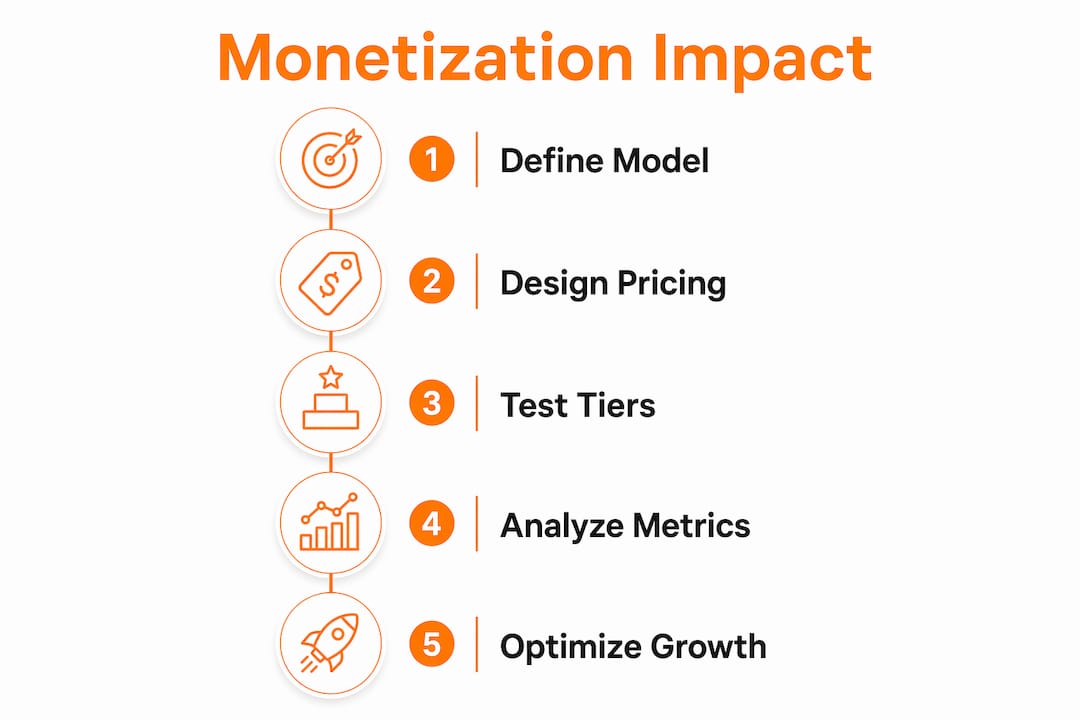
Pricing tier architecture has an outsized effect on conversion. A three-tier structure (free, mid, premium) gives audiences a clear decision path. Without it, creators often see high free engagement and low paid conversion because there is no obvious next step. The gap between free and paid needs to feel like a natural progression, not a wall.
Metrics that matter most in this context include conversion rate from free to paid, monthly churn rate, and average revenue per paying user (ARPPU). Tracking these together tells you whether your structure is working or leaking revenue at a specific stage.
Excessive ad frequency or intrusive paywalls significantly harm user experience and confidence. This is the tension every creator faces. Push monetization too hard and you erode the trust that makes your audience valuable in the first place. The goal is a structure where paying feels like a natural, even desirable, step.
Payment infrastructure also matters more than most creators realize. Localized currencies and renewal handling increase conversion and reduce involuntary churn. A subscriber who loses access because of a failed card renewal is a preventable loss. Tools like Stripe, Paddle, and Chargebee address this directly.
Pro Tip: Run 90-day A/B tests on pricing pages and paywall placement. Continuous testing over 90 days captures both initial conversion signals and the renewal behavior that reveals true retention.
Why hybrid monetization structures dominate in 2026
A hybrid monetization model combines two or more revenue streams within a single product or content ecosystem. The business rationale is straightforward: no single model captures the full range of your audience’s willingness to pay.
67% of B2B SaaS companies now use hybrid models combining subscription, usage-based, and feature pricing. That majority reflects a market-wide recognition that locking into one revenue mechanism leaves money on the table and concentrates risk. For digital creators and educators, the same logic applies.
Free apps generate 97% of app store revenue through hybrid models that combine freemium access, subscriptions, ads, and in-app purchases. That figure is striking because it shows that the free entry point is not a revenue sacrifice. It is the top of a funnel that feeds multiple monetization layers.
Here is how to implement a hybrid structure as a content creator or educator:
- Start with a free tier that delivers genuine value and builds audience trust. This is your acquisition engine.
- Add a subscription layer for ongoing access to premium content, community, or tools. This creates recurring revenue.
- Layer in affiliate or sponsored content for high-intent audience segments who are already in a buying mindset.
- Introduce one-time purchases such as courses, templates, or workshops for users who prefer ownership over subscription.
- Use usage-based or seat-based pricing if your product scales with team or organizational use.
Audience segmentation is what makes hybrid models work in practice. Not every subscriber wants the same thing. Some want community access, others want downloadable assets, and others want live coaching. A hybrid structure lets you serve each segment at the price point that matches their engagement level.
Designing monetization as part of your content architecture
High-performing digital businesses design monetization architecture from the user’s willingness-to-pay moment backward, letting that decision influence all product choices including feature gating and paywall timing. This is the opposite of how most creators approach it. Most build the content first and then ask where to put the paywall. That sequence produces friction and lost revenue.
Backward design from willingness-to-pay means asking one question before you build anything: at what moment does your audience feel the most value? For an online course, that moment might be after a free lesson that solves a specific problem. For a newsletter, it might be after three issues that deliver a clear result. The paywall belongs right after that moment, not before it.
Aligning features and access tiers with revenue tiers requires deliberate planning. Free users should get enough to understand the value. Paid users should get enough to feel the upgrade was worth it. Premium users should get access that feels exclusive and personal.
Treating monetization as a core product design decision yields up to 50 to 200% more revenue compared to reactive monetization. That range is wide, but even the lower end represents a doubling of income from the same audience. The difference is not more content or more traffic. It is better architecture.
Pro Tip: Avoid hardcoded pricing in your product build. Flexible monetization infrastructure lets you change pricing and packaging without engineering work, which means you can test and iterate without a development bottleneck.
How monetization structure builds financial resilience
A well-designed revenue structure does more than generate income. It creates the financial stability that lets you grow without constant anxiety about next month’s numbers.
Value-based and usage-based pricing models align your revenue growth with the actual value your audience receives. This alignment is what enables price increases of around 7% while retaining 98% of customers. Audiences accept price increases when they feel the value has grown proportionally. They churn when they feel the price has outpaced the benefit.
| Financial metric | What it measures | Why it matters for creators |
|---|---|---|
| Customer lifetime value (CLV) | Total revenue per subscriber over time | Tells you how much to spend acquiring each new subscriber |
| Churn rate | Percentage of subscribers who cancel monthly | Reveals whether your value delivery matches your pricing |
| Net revenue retention (NRR) | Revenue retained plus expansion from existing subscribers | Above 100% means existing subscribers are growing your revenue |
| Customer acquisition cost (CAC) | Cost to acquire one paying subscriber | Must stay below CLV for the business to be sustainable |
Net revenue retention above 100% is the clearest sign of a healthy monetization structure. It means your existing audience is spending more over time, through upgrades, add-ons, or expanded access, without requiring constant new subscriber acquisition. For educators and course creators, this often comes from alumni who return for advanced courses or coaching programs.
Operational clarity is another underrated benefit. When your revenue model is explicit and documented, you can forecast cash flow, plan content production budgets, and make hiring decisions with confidence. Creators who operate without a defined structure tend to underinvest in growth because they cannot predict whether the money will be there next quarter.
Key takeaways
A well-designed monetization structure is the single most controllable variable in a digital creator’s revenue growth, outweighing traffic volume or content frequency.
| Point | Details |
|---|---|
| Structure precedes revenue | Design your monetization model before building content tiers, not after. |
| Hybrid models reduce risk | Combining subscriptions, affiliate, and one-time purchases protects against single-stream volatility. |
| Willingness-to-pay drives design | Place paywalls and upgrade prompts at the moment of highest perceived value. |
| Metrics reveal leaks | Track conversion rate, churn, and ARPPU together to find where your structure loses revenue. |
| Pricing discipline enables growth | Value-aligned pricing allows increases without significant churn, building long-term financial resilience. |
Why most creators get monetization backwards
I have reviewed dozens of creator businesses where the content was genuinely excellent and the audience was engaged, yet the income was unpredictable and exhausting to maintain. In almost every case, the problem was not the content. It was the sequence. Monetization had been added after the fact, like a price tag stuck onto something that was designed to be free.
The creators who build sustainable income start with a different question. Instead of “how do I monetize this?” they ask “what is my audience willing to pay for, and when?” That shift changes everything from how they structure their free content to how they time their upgrade prompts.
The other pattern I see repeatedly is over-reliance on a single revenue stream. A creator builds a course, the course sells well for six months, and then sales plateau. Because there is no subscription layer, no affiliate revenue, and no community product, the income flatlines. Diversification is not a hedge against failure. It is the structure that makes growth compounding rather than cyclical.
The creators who get this right treat their monetization architecture with the same rigor they give their content calendar. They test pricing, iterate on tier design, and watch their metrics weekly. That discipline is what separates a content business from a content hobby.
— Sale
Build your monetization architecture with Revenueoperator
If this article has clarified the importance of monetization models and the mechanics behind them, the next step is applying that understanding to your specific content business.
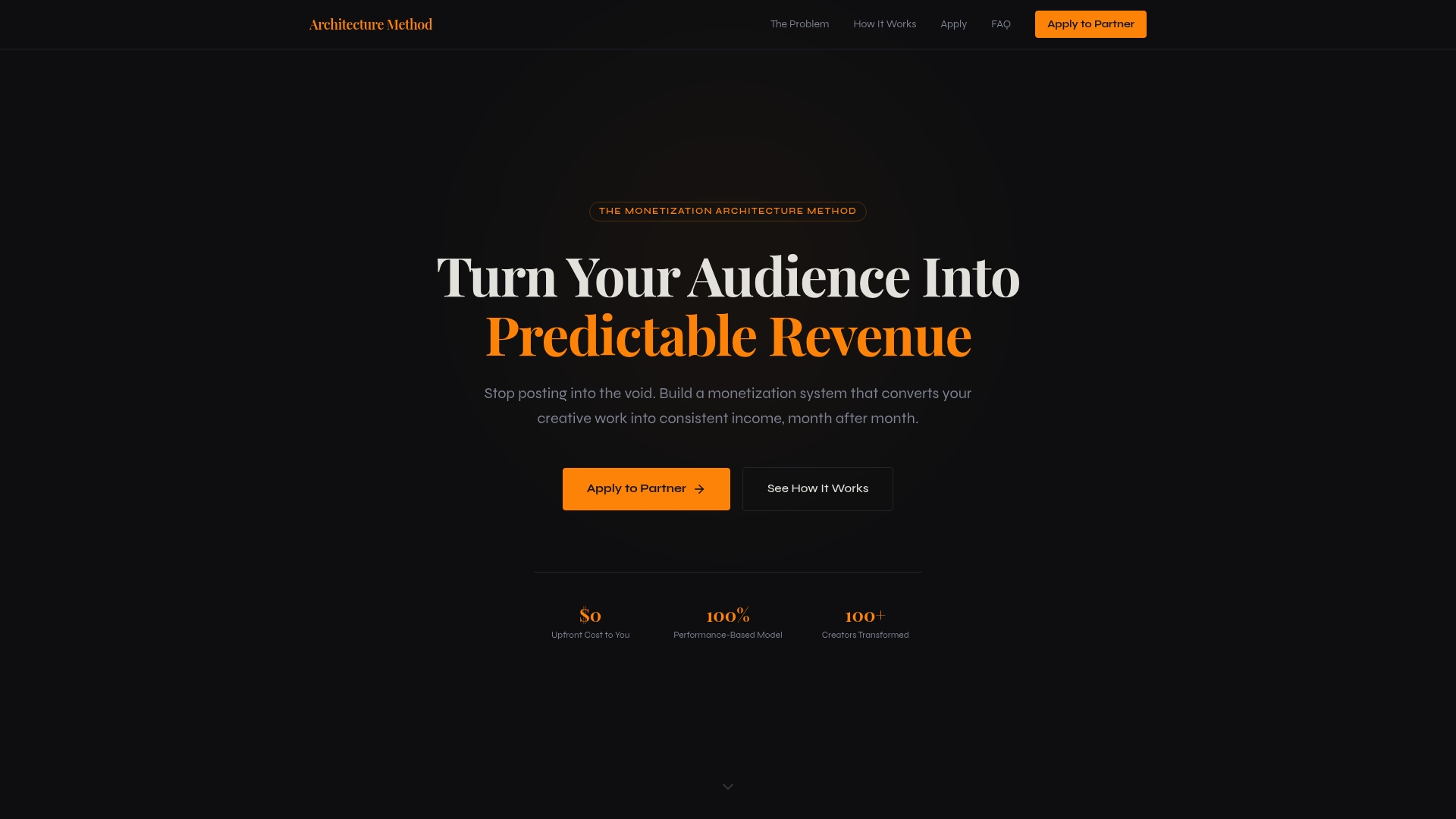
Revenueoperator’s Monetization Architecture Method gives digital creators and educators a structured framework for moving audiences from free engagement to paid offerings without guesswork. The method covers tier design, pricing experiments, and the revenue metrics that actually predict sustainable income. Creators who have implemented it report moving from inconsistent monthly earnings to predictable, growing revenue. Visit Revenueoperator to explore how the framework applies to your content business and start building a revenue structure that works while you create.
FAQ
What is a monetization structure in digital content?
A monetization structure is the organized system that defines how a creator or educator generates revenue from their content, including which models they use, how pricing tiers are designed, and how free and paid experiences connect.
Why do hybrid monetization models outperform single-stream approaches?
Hybrid models serve different audience segments at different willingness-to-pay levels, which maximizes total revenue per user. Free apps using hybrid approaches generate 97% of app store revenue precisely because they capture value from every engagement level.
How does monetization structure affect audience conversion rates?
The architecture of your pricing tiers and paywall placement directly determines how many free users become paying customers. A clear progression from free to paid, placed at the moment of highest perceived value, produces the strongest conversion rates.
When should creators start planning their monetization structure?
Monetization planning belongs at the content ideation stage, not after launch. Designing from the audience’s willingness-to-pay moment backward produces up to 200% more revenue than retrofitting a model onto existing content.
What metrics should educators track to optimize their revenue structure?
The four metrics that matter most are conversion rate from free to paid, monthly churn rate, average revenue per paying user, and net revenue retention. Together, they show exactly where a monetization structure is performing and where it is leaking income.